Paving
in Paisley
We lay patios, paths and block paving for Paisley's stone terraces, villas and family semis.
- Sandstone, porcelain or block paving
- Terraces, villas, 1930s semis and new builds
- Ring first, or leave a short form
Five paving jobs, and which one is yours
Each job has its own page. Pick the one that sounds like your garden.
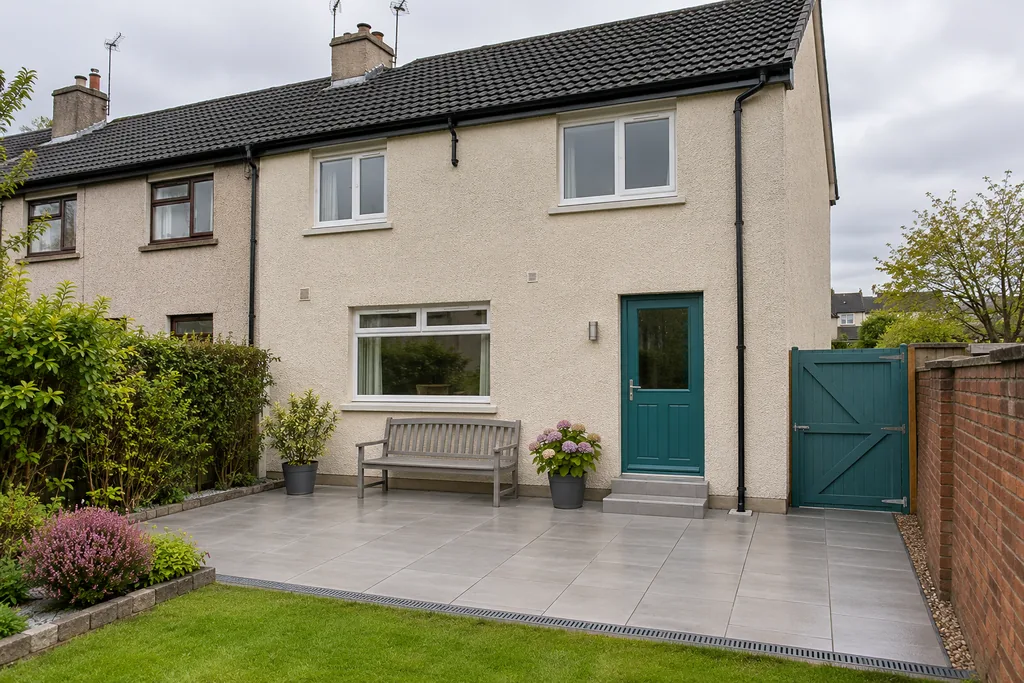
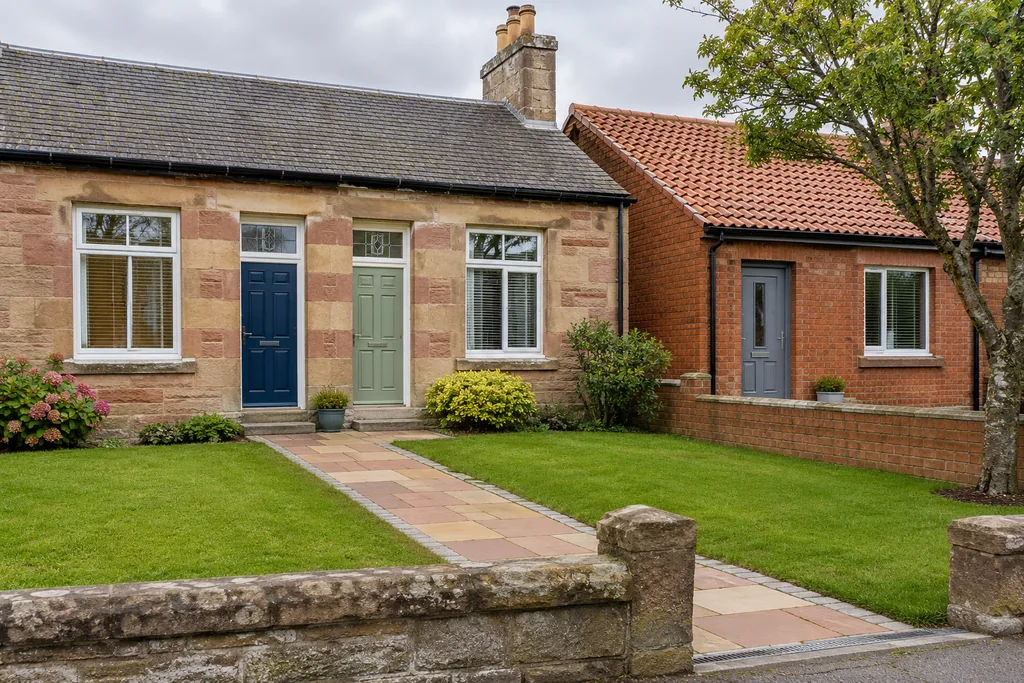
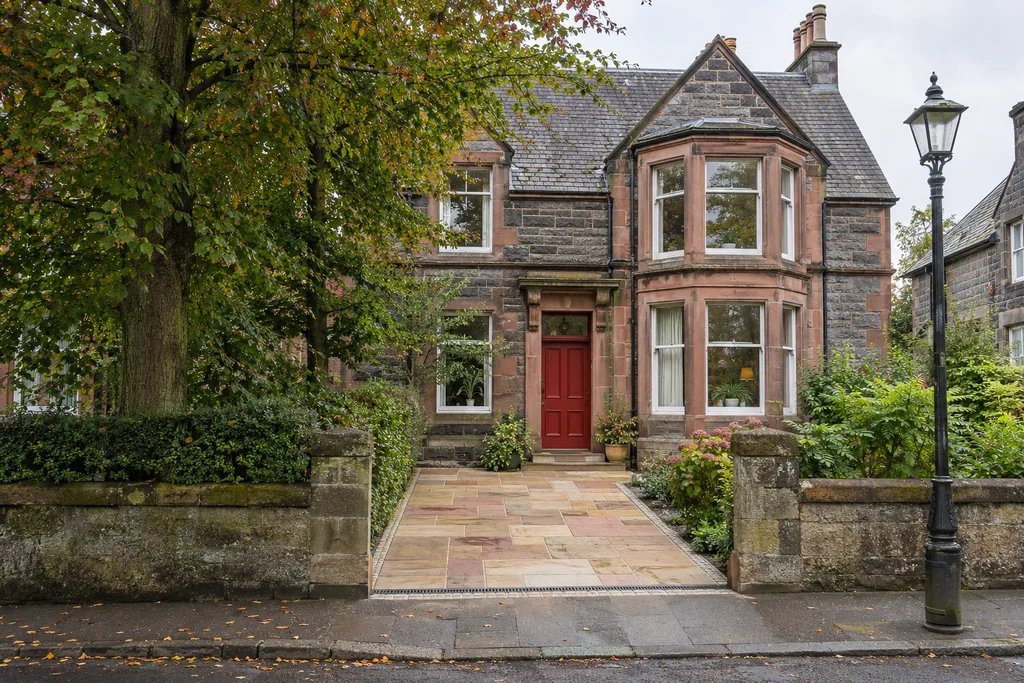
Sandstone terraces and villas
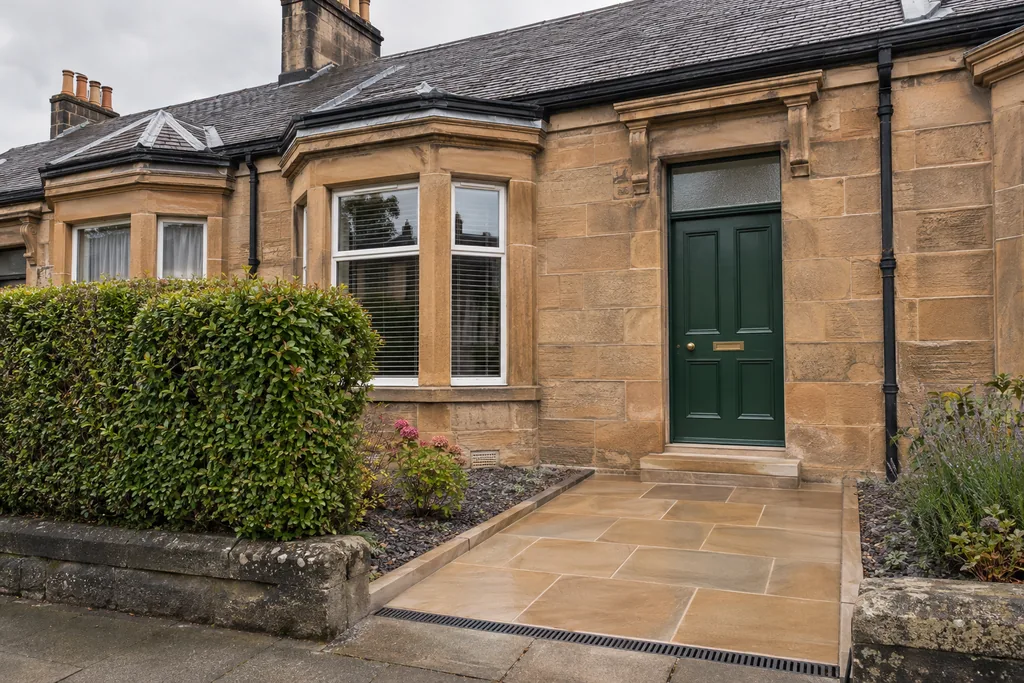
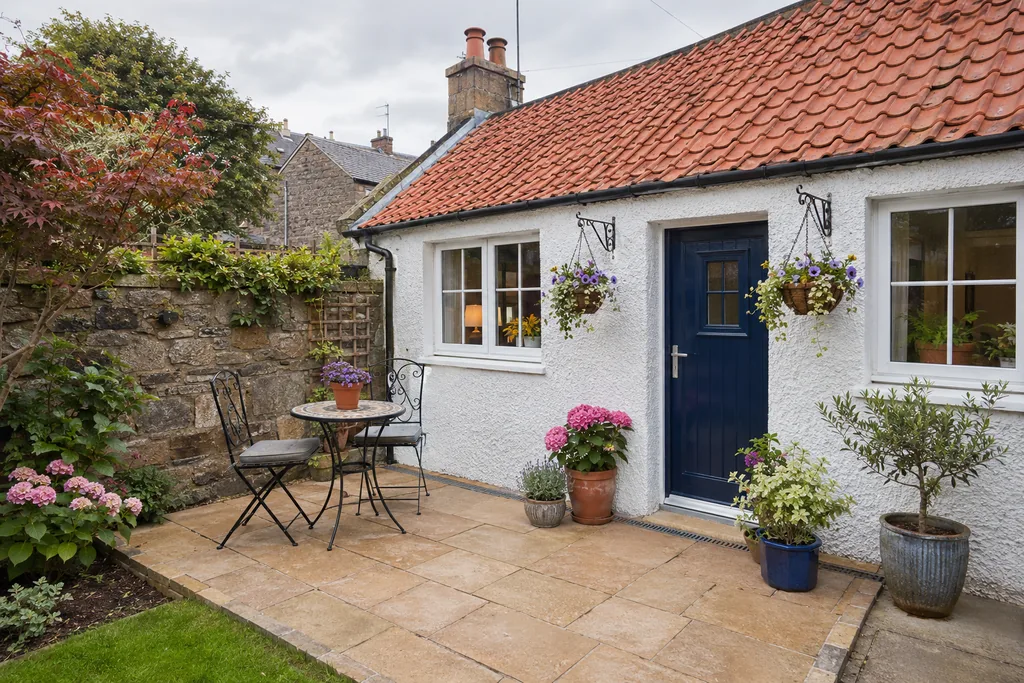
Paisley is a stone town: the Abbey goes back to a priory founded in 1163, and the Thomas Coats Memorial Church is old red sandstone (Wikipedia, read 24 November 2026). Plain grey slabs beside a warm wall can look like a patch, so we talk through colour and finish before you pick.
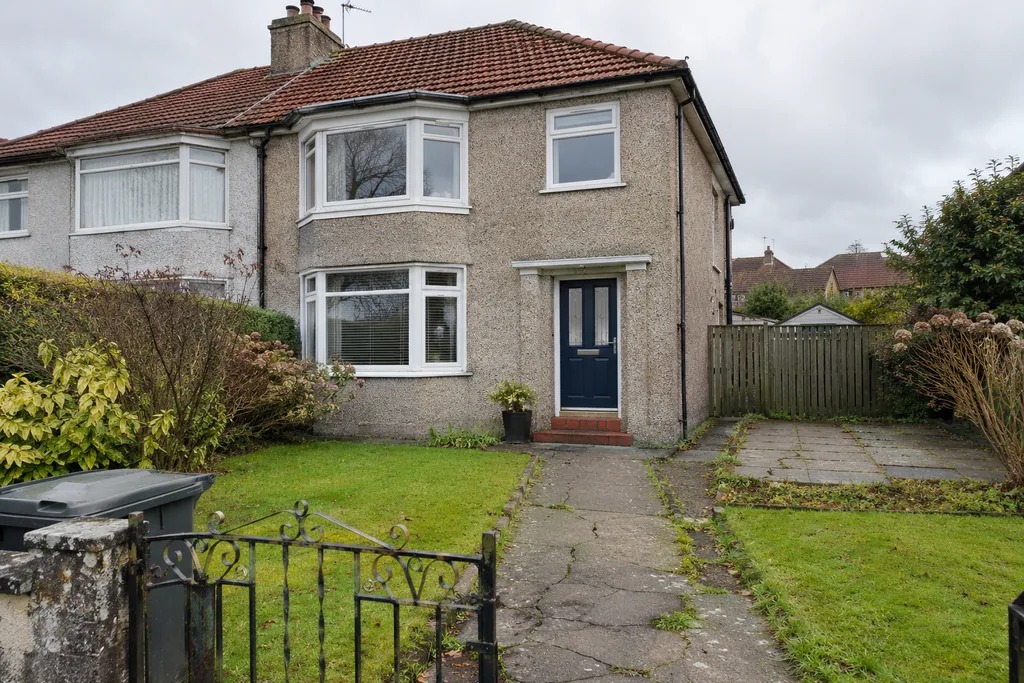
1930s semis and post-war estates
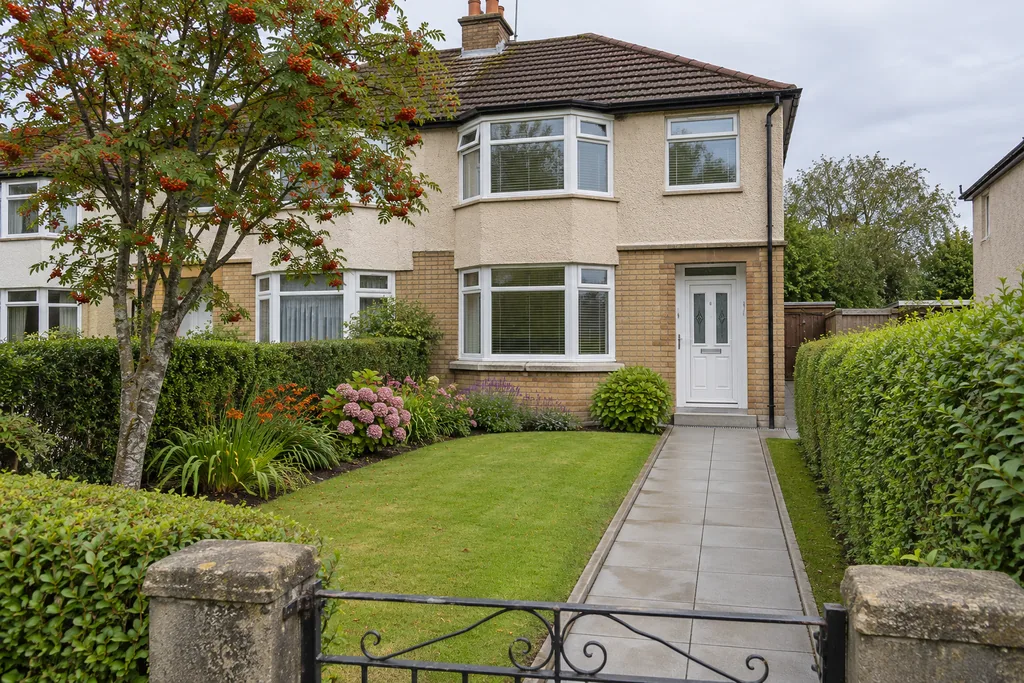
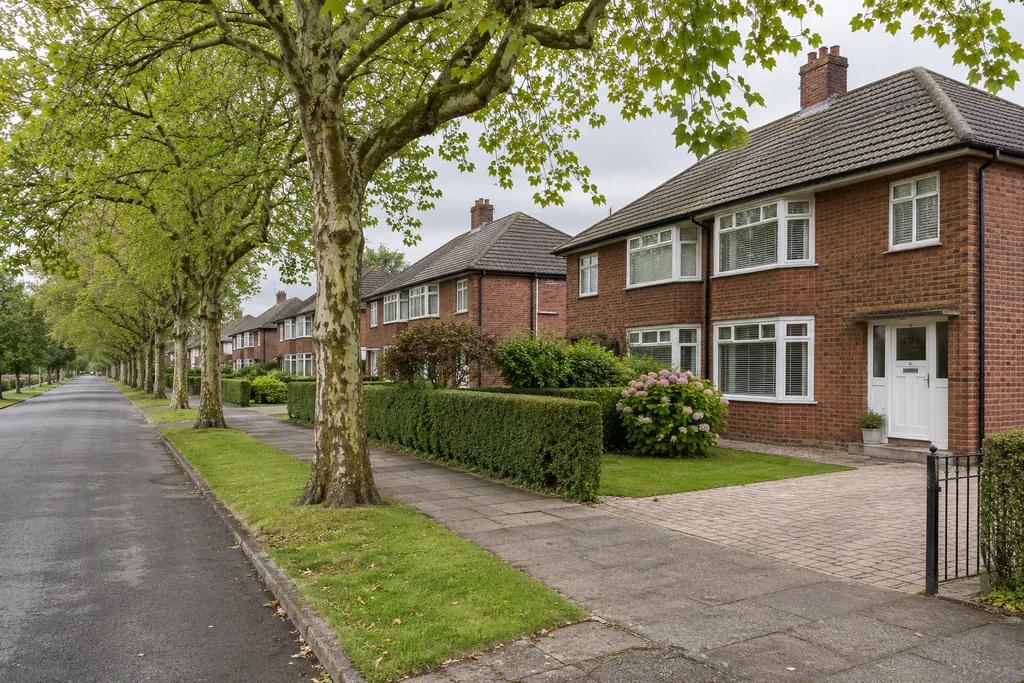
Ralston dates from the 1930s, and Glenburn, Foxbar, Gallowhill and Gockston followed the 1946 Housing Act (Wikipedia, read 24 November 2026). Many of those gardens have a cracked concrete path, and we swap it for a new one on a proper base.
New builds around Renfrewshire
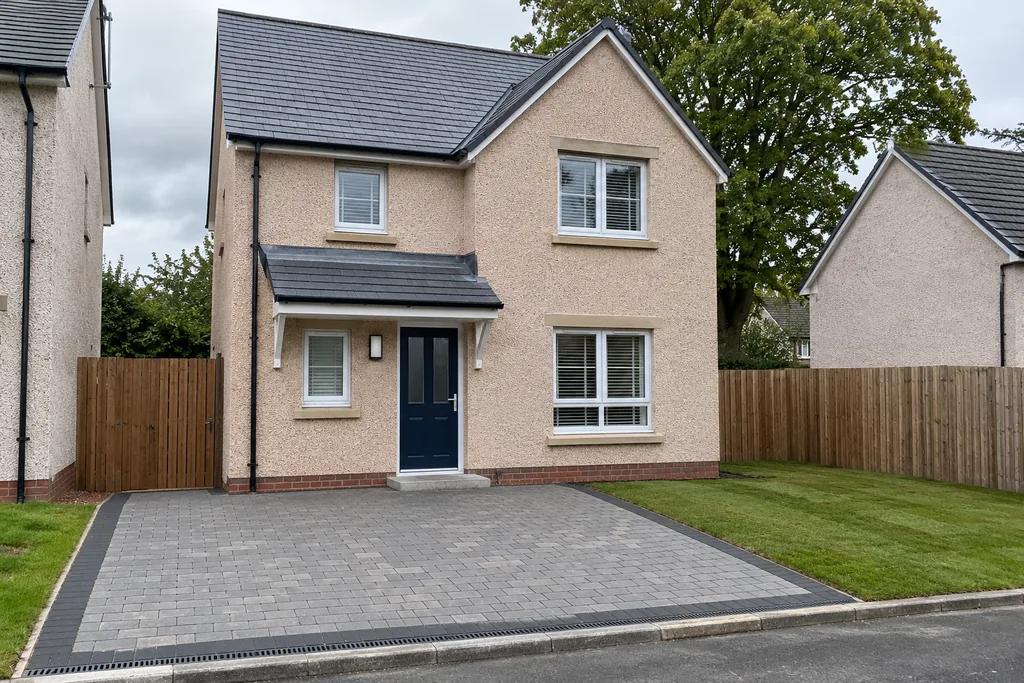
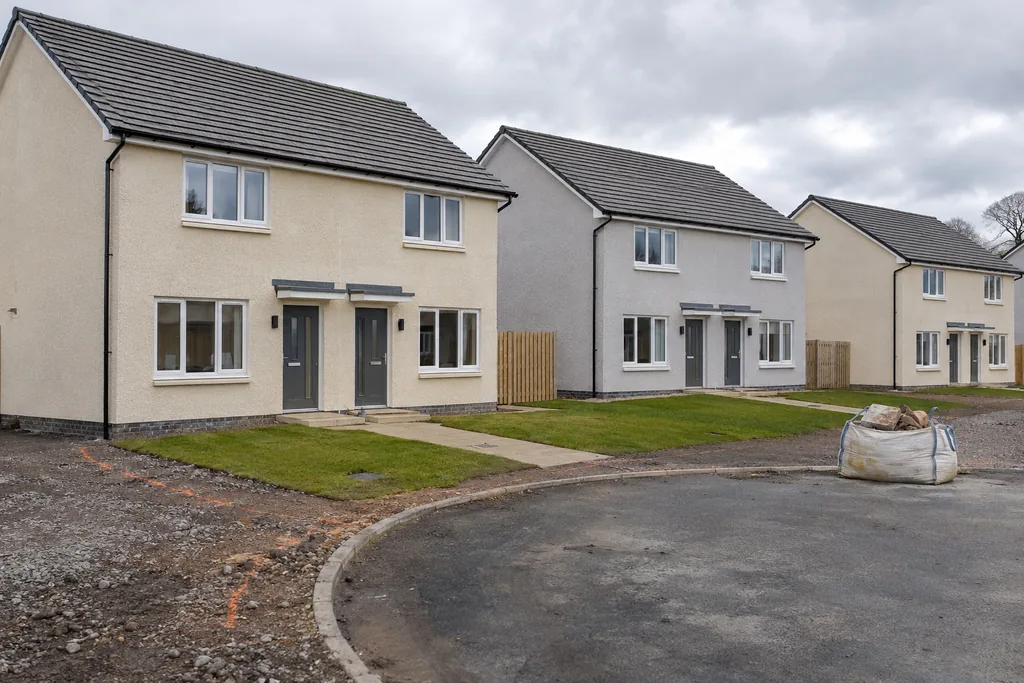
A new house usually comes with a bare front plot over builder's fill, packed hard and slow to drain. We dig out what won't let water through before any block goes down. Our guide to block paving a new-build front covers the steps.
Renfrewshire rules, in plain words
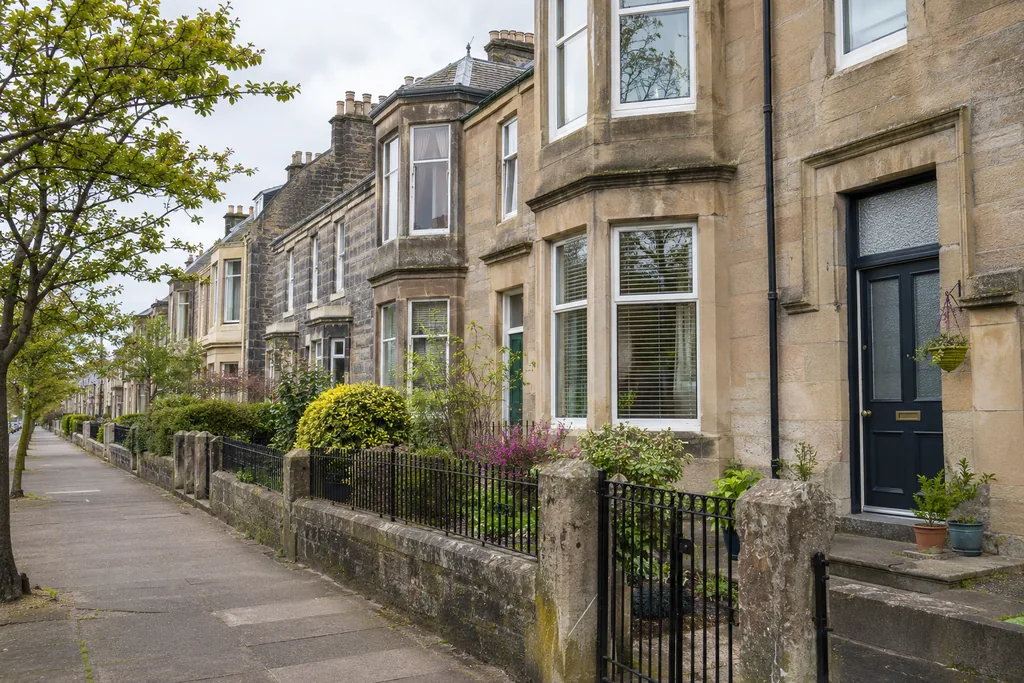
Most hard surfaces at your own house need no application. The exceptions are a surface between the house and a road, and a house inside a conservation area or next to a listed building (mygov.scot, last updated 18 November 2025). Ask Renfrewshire Council about your address.
The people behind the paving
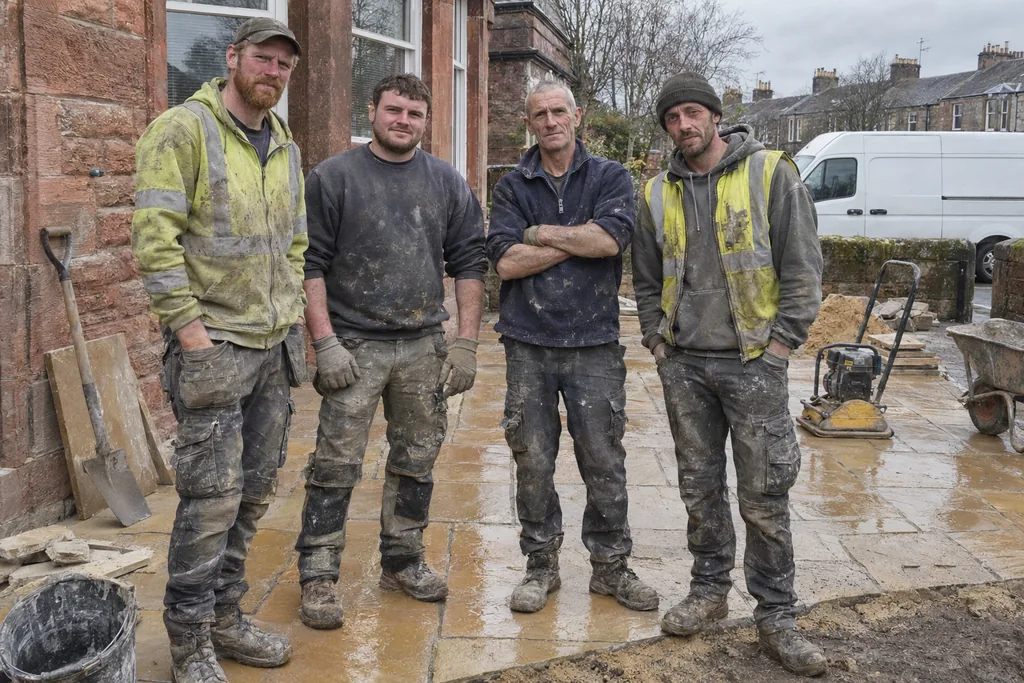
Ring us first and you'll get a straight answer. The about page has a little more.
Owner: John Walker
John Walker is the owner and takes your call.
What sets the price
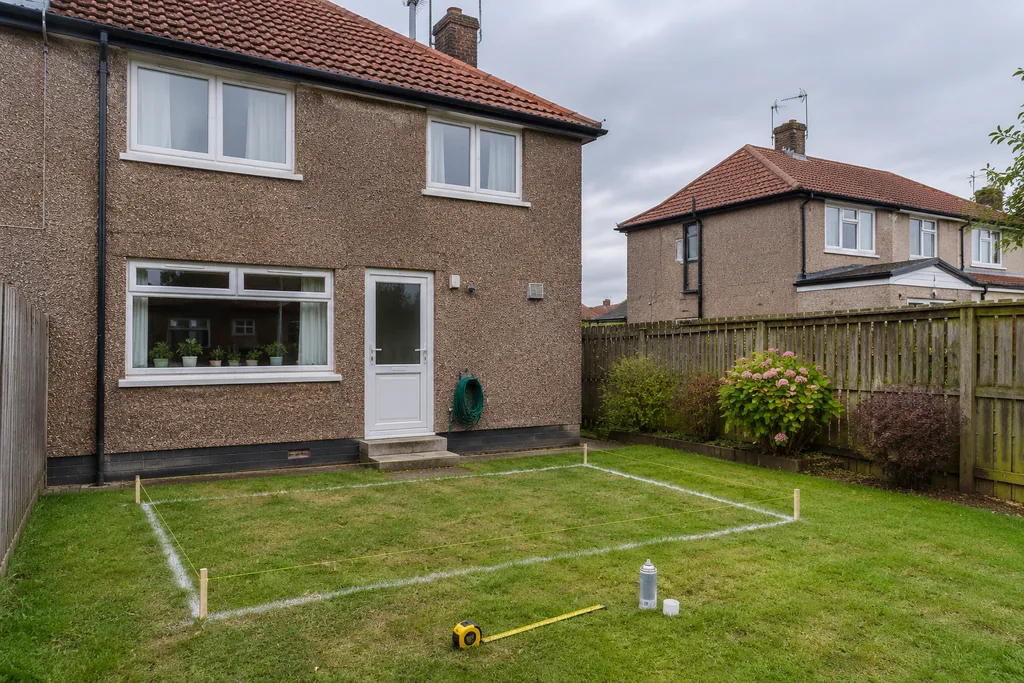
The costs page lists UK guide prices and what moves a quote, because no two gardens match. Three things do most of the work.
Paisley and the towns beside it
Give us your postcode on the phone and we'll say whether we can get to you.
Paisley paving questions
Can I pave my front garden freely?
It can. Permission becomes a question for a surface at the front facing the road, a conservation-area house or a home beside a listed building. The Scottish Government's page also asks for road-facing surfaces to be porous or to drain to a lawn or border (mygov.scot, last updated 18 November 2025). Ask Renfrewshire Council before work starts.
Will new slabs look odd next to my old stone house?
Not if the colour and finish are chosen against your walls. We'll compare samples with you. See paving styles.
My old concrete path has cracked. Can you replace it?
Yes. The old concrete is broken out, the base is rebuilt and the new path is laid with a fall. The 1930s and post-war garden guide goes through it.
Do you lay block paving for parking?
Yes, we do block paving for a parking space or wide path. See block paving.
Can you work in a conservation area?
We can lay paving there, but the council may want a say first. Renfrewshire has eight conservation areas: Castlehead, Greenlaw, Houston, Kilbarchan, Lochwinnoch, Ranfurly in Bridge of Weir, Paisley Town Centre and Thornly Park (news report on the council's conservation guide at the-gazette.co.uk, undated, read 24 November 2026). Wikipedia also describes Oakshaw, beside the Abbey, as a conservation area (read 24 November 2026). Ask Renfrewshire Council which one covers your street.
Does a dropped kerb need permission?
Yes. A dropped kerb is work in a public road, and the Roads (Scotland) Act 1984, section 56, says no works may be done there without the roads authority's written consent (legislation.gov.uk, up to date to 22 November 2026). For Paisley, that authority is Renfrewshire Council.
What should I have ready when I call?
Your postcode, the rough size, what's there now and anything that might make access difficult.
Tell us about your garden
Add your postcode and the job you have in mind, and we'll reply.