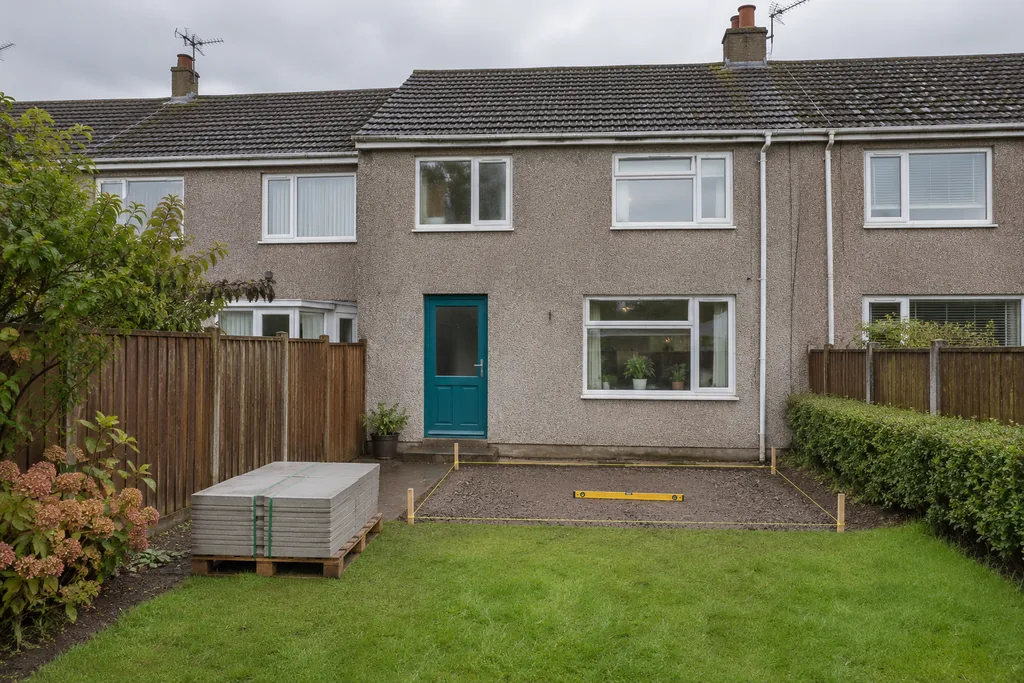
Paving installation
in Paisley
A plain walk-through of what happens on a paving job, from first look to last sweep.
- Ground checked before anything is dug
- A stone base built in layers
- A tidy finish and a clear-up
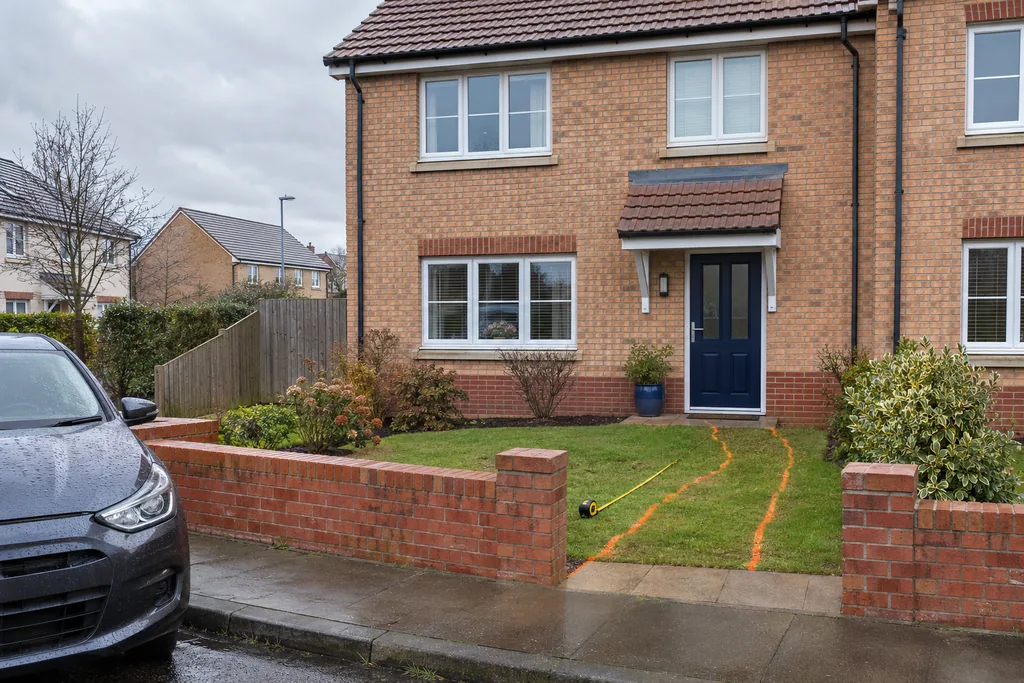
Stage one: look at the ground
Before we quote, we want to see the plot. How big is it? Where does the rain run? Is the ground firm, soggy or full of builder's rubble? How will materials arrive, and is there room for a skip?
A good first look saves a nasty surprise on day two. It also lets us say what the job needs, rather than guess.
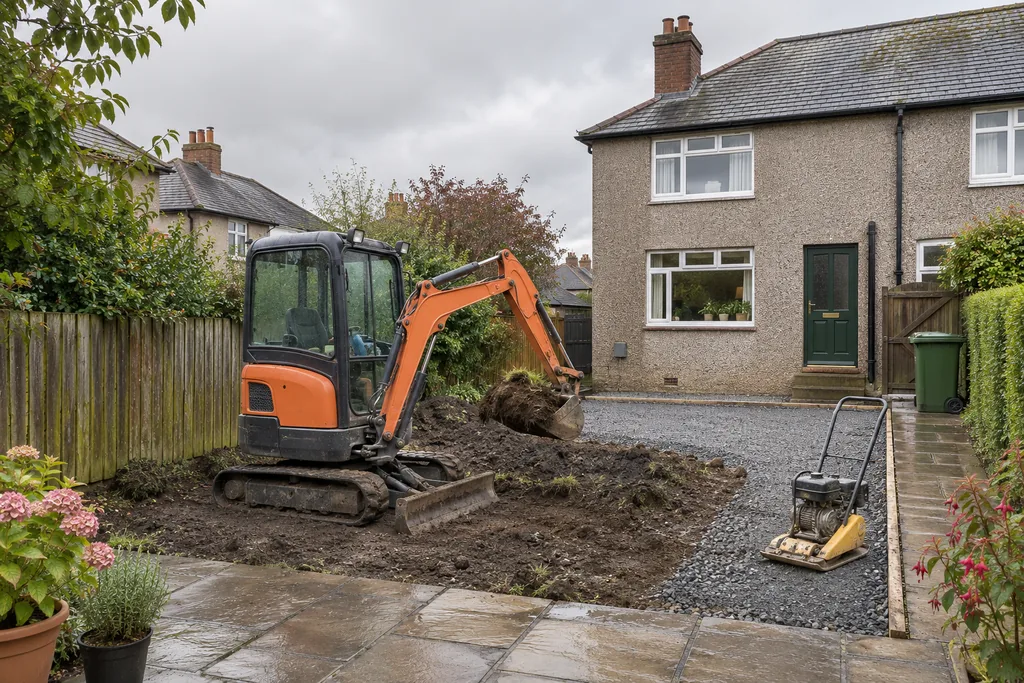
Stage two: dig and build the base
The dig removes turf, old concrete and soft soil, and goes deeper where the ground is bad. Then the stone goes in a few centimetres at a time, each layer pressed down hard so it can't settle later.
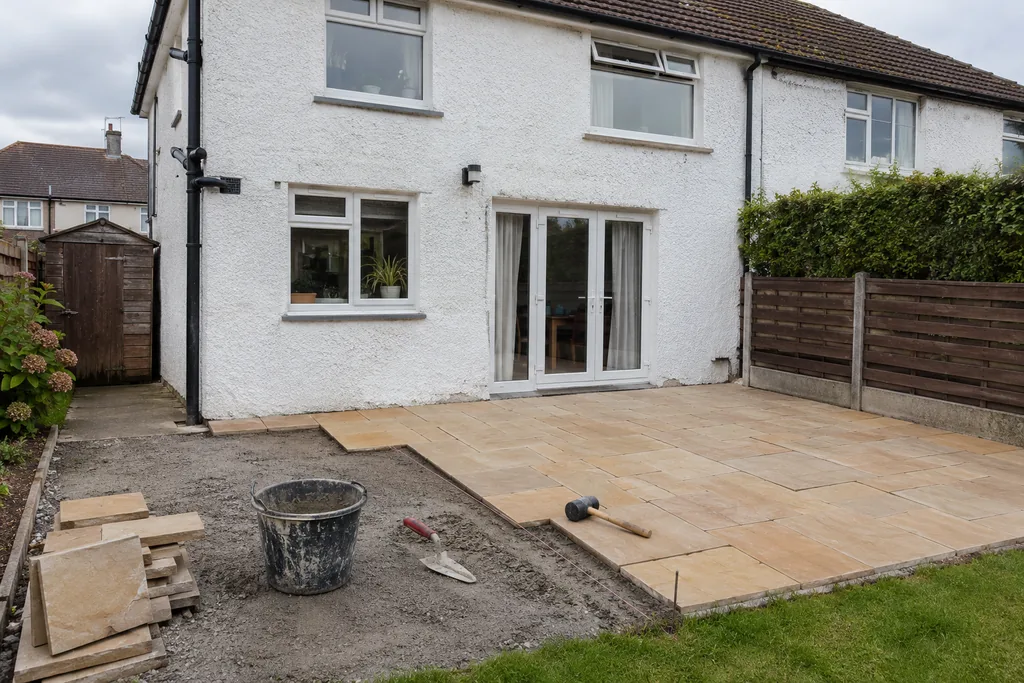
Stage three: lay, joint and tidy
Slabs, stones or blocks are set on a thin bedding layer one at a time and tapped level. Cuts are made on site, joints are filled and the area is swept. Before we leave we walk you round the finished job.
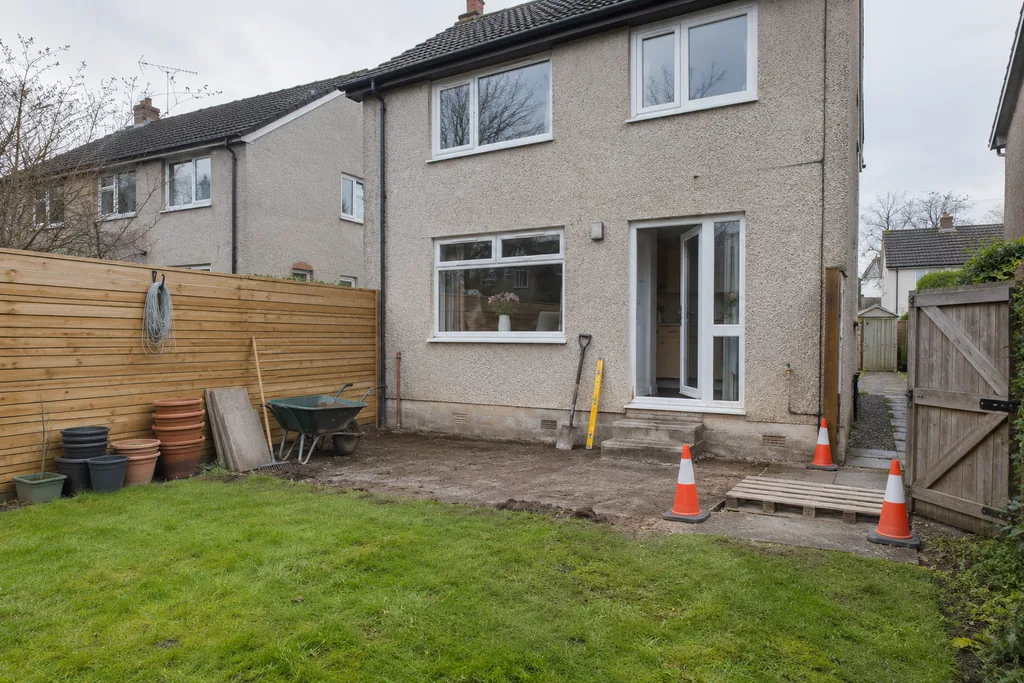
What you can do beforehand
- Clear the area. Move pots, furniture and washing lines.
- Tell us about hidden things. Drains, cables or an old tank.
- Say where materials can go. A pallet needs a flat spot.
- Check any rules. See the Renfrewshire notes and ask the council.
Paving installation questions
What happens at the first visit?
We walk the plot, measure, ask what you want and talk through the base and falls.
Can paving go down in winter?
Often, as long as the weather lets mortar and joints set. We'd rather wait a day than lay something that fails.
How long will the job take?
Size, soil and the forecast all play a part. We'll say once we've seen the plot.
What happens to the old surface?
That's the usual plan.
Who arranges a dropped kerb?
Work to the kerb needs written consent from the roads authority, which in Paisley is Renfrewshire Council (Roads (Scotland) Act 1984, section 56; legislation.gov.uk, up to date to 22 November 2026).
Do I have to be out while you work?
Yes. Expect noise from the compactor and some dust on dry days.